All creatures great and small

We’re in the poetic animal kingdom this week with illustration inspiration from Ruth and also Japanese illustrator Miroco Machico.

The poems (in full below) are The Tyger by William Blake, The Cat and the Sea by RS Thomas, A Popular Personage at Home by Thomas Hardy, The Crocodile by Lewis Carroll and Dragonfly by Rebecca Kai Dotlich.

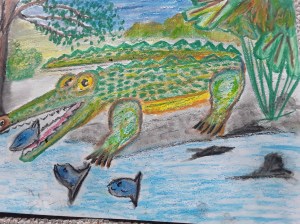
First in were Rachel’s watercolour seaside cat and Beth’s smiling croodile in pastels.

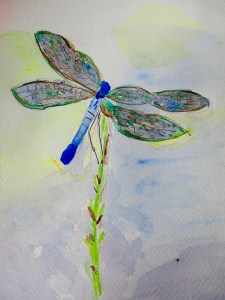
Coming next into the menagerie, two by two, were Trish’s watercolour dragonfly, cats, dogs and dragonfly!

Next, a portrait in charcoal of Anne’s dog Holly- very definitely a ‘popular personage at home’ like Thomas Hardy’s dog, immortalised in his poem.

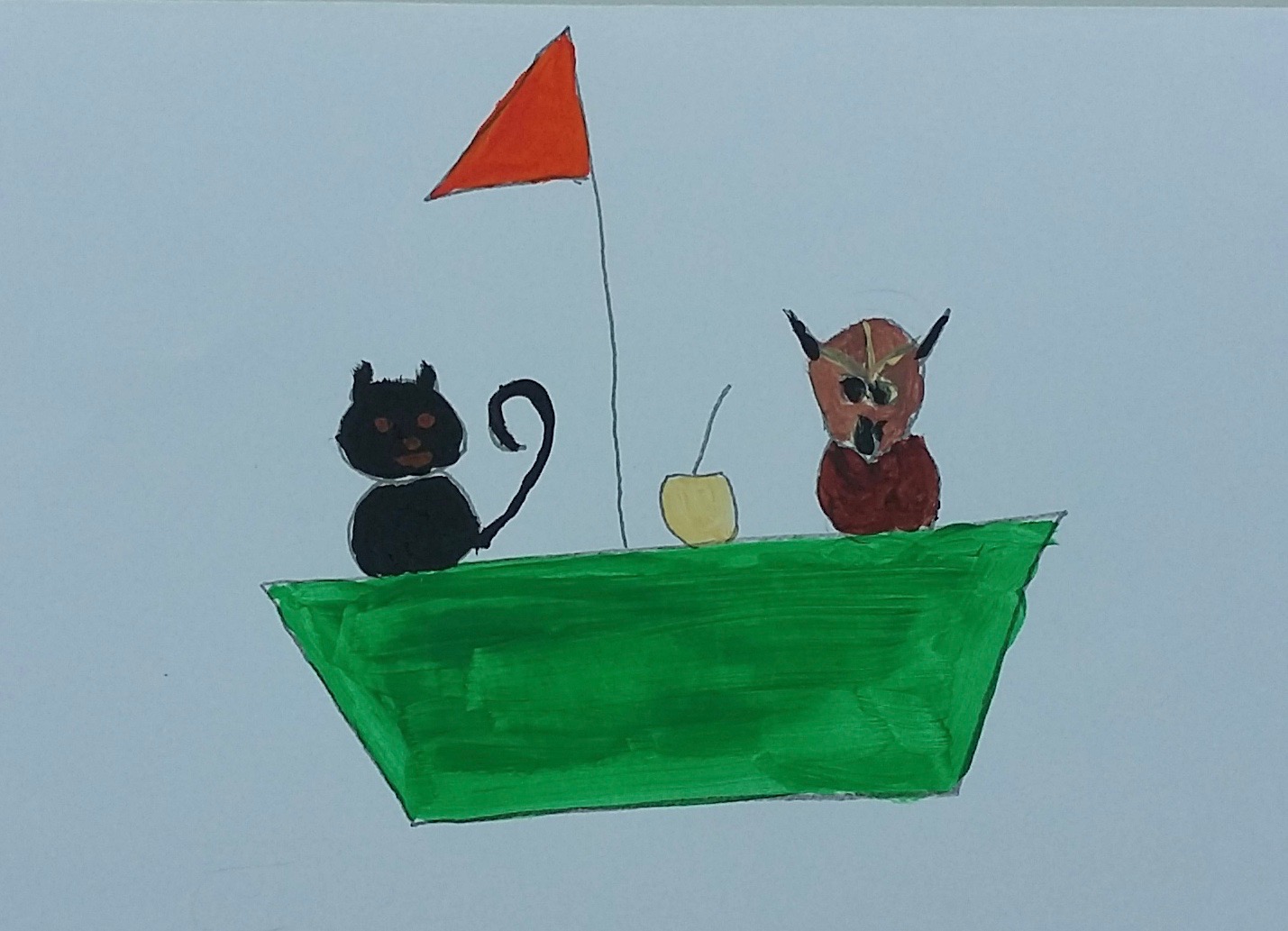
And keeping a look out on the painted ocean … Mavis’s maritime moggy..

Mavis

The Cat and the Sea
by RS Thomas
It is a matter of a black cat 
On a bare cliff top in March 
Whose eyes anticipate
The gorse petals;
The formal equation of 
A domestic purr
With the cold interiors 
Of the sea's mirror.

A Popular Personage at Home
by Thomas Hardy

‘I live here: “Wessex” is my name: 
I am a dog known rather well:
I guard the house but how that came 
To be my whim I cannot tell. 

‘With a leap and a heart elate I go
 At the end of an hour’s expectancy 
To take a walk of a mile or so
With the folk I let live here with me. 

‘Along the path, amid the grass 
I sniff, and find out rarest smells 
For rolling over as I pass
The open fields toward the dells. 

‘No doubt I shall always cross this sill, 
And turn the corner, and stand steady, 
Gazing back for my Mistress till
She reaches where I have run already, ‘

And that this meadow with its brook, 
And bulrush, even as it appears 
As I plunge by with hasty look,
Will stay the same a thousand years.’ 

Thus ‘Wessex.’ But a dubious ray
At times informs his steadfast eye, 
Just for a trice, as though to say, ‘
Yet, will this pass, and pass shall I?’ 
The Tyger by William Blake

Tyger Tyger, burning bright,
In the forests of the night;
What immortal hand or eye,
Could frame thy fearful symmetry?

In what distant deeps or skies,
 Burnt the fire of thine eyes?
On what wings dare he aspire? 
What the hand, dare seize the fire?

And what shoulder, & what art, 
Could twist the sinews of thy heart? 
And when thy heart began to beat, 
What dread hand? & what dread feet?

What the hammer? what the chain,
 In what furnace was thy brain? 
What the anvil? what dread grasp,
 Dare its deadly terrors clasp!

When the stars threw down their spears 
And water'd heaven with their tears:
 Did he smile his work to see?
Did he who made the Lamb make thee?

Tyger Tyger burning bright,
In the forests of the night:
What immortal hand or eye,
Dare frame thy fearful symmetry?

The Crocodile by Lewis Carroll

How doth the little crocodile 
Improve his shining tail,
And pour the waters of the Nile
On every golden scale!

How cheerfully he seems to grin,
 How neatly spreads his claws, 
And welcomes little fishes in, 
With gently smiling jaws.
Dragonfly by Rebecca Kai Dotlich

     This sky-ballerina,
     this glimmering
       jewel,
    glides in a gown
    of lucid blue –
   with wings that you
  could whisper thrOUgh
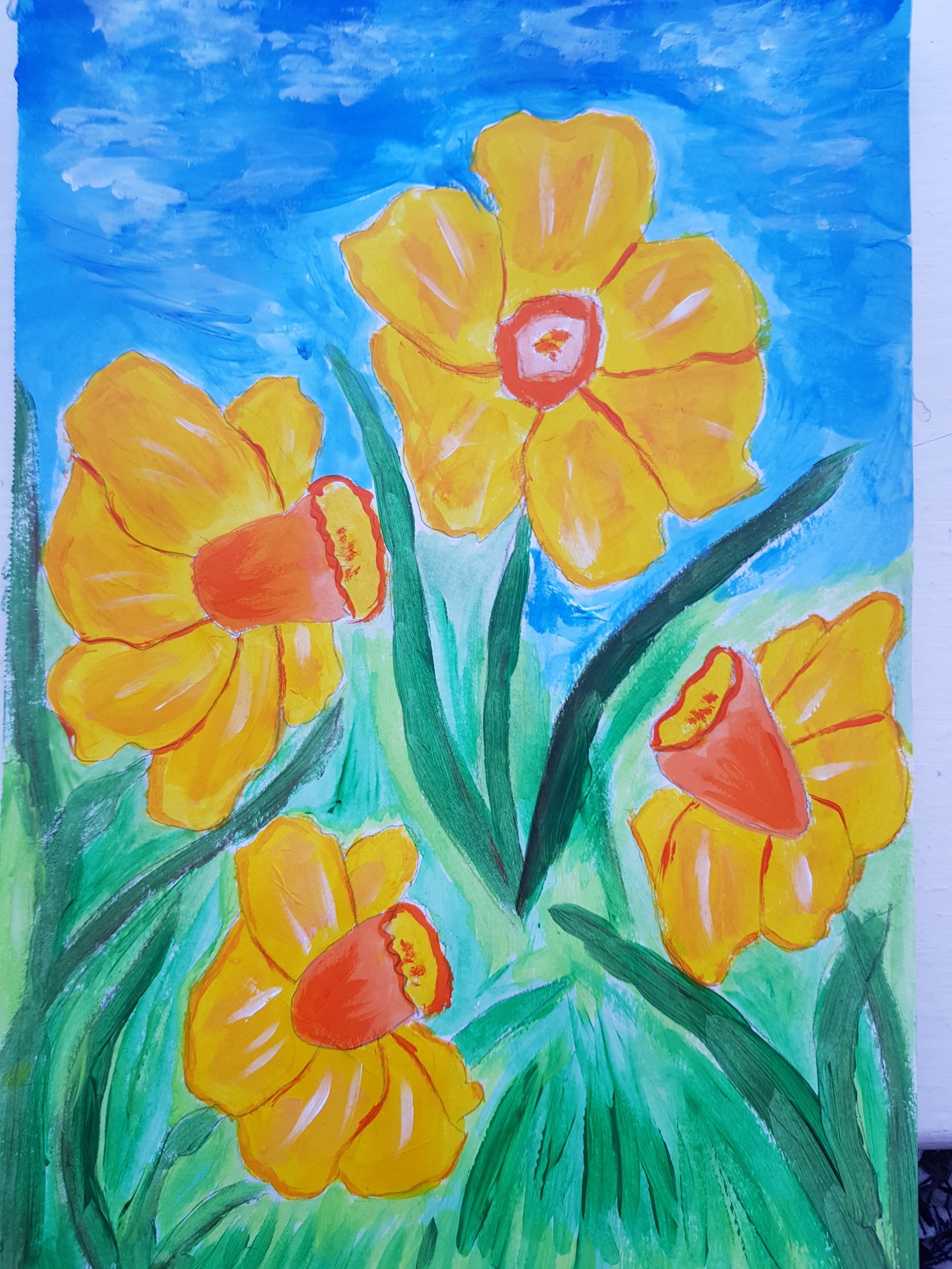
Dydd Gŵyl Dewi Hapus – Happy St David’s Day

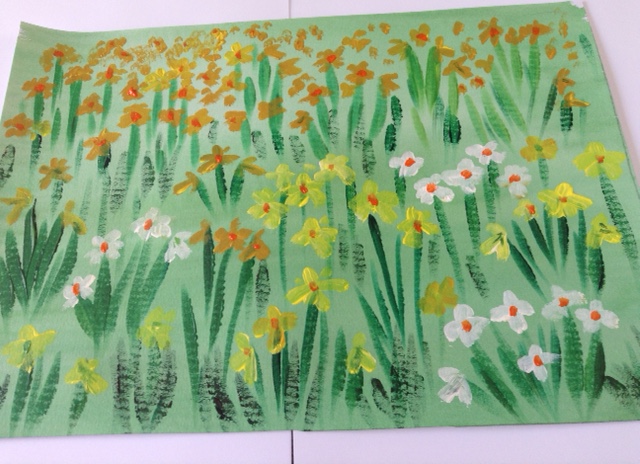
It’s nearly a year since we last met together and eleven months since we were painting these daffodils in the first of our series of poetry illustrations!

These paintings are also on show as part of our exhibition of work at Conwy Culture Centre – on the centre’s windows facing into the park.

Pictured in words

Roman poet Horace said : “A picture is a poem without words.”

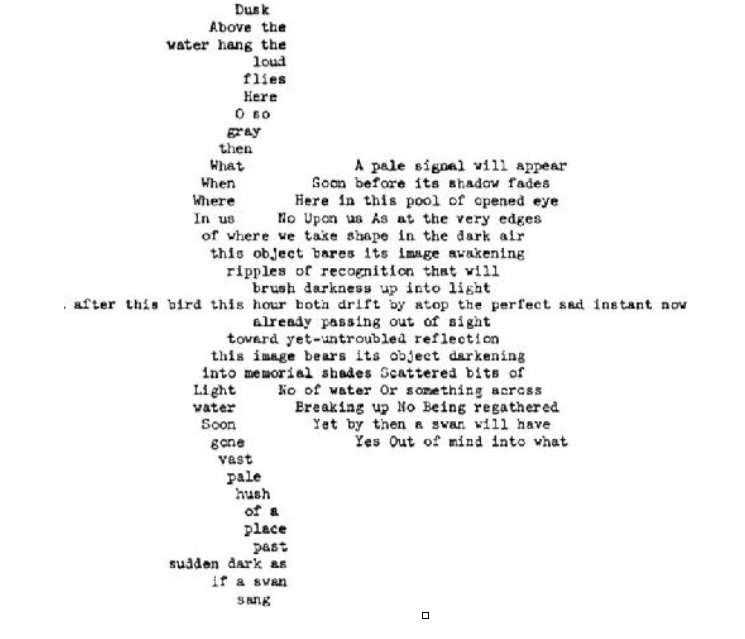
What he would have made of our poems which are made of words, we will never know. Concrete poetry was our inspiration this week and we were following in the footsteps of poets such as John Hollander and his swan poem/poem swan.

Swan and Shadow
John Hollander

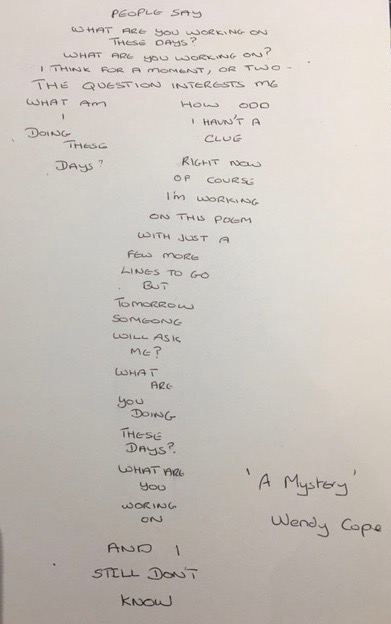
First in was Trish’s enigmatic question mark for Wendy Cope’s poem ‘A Mystery’, swiftly followed by Rachel’s wise old owl inspired by Edward Hersey Richard’s nursery rhyme; and Mavis’s illustration of Ode to a Tree by Alfred Joyce Kilmer!

Picasso’s sleeping woman

Sue’s challenge to us this month was to take a surreal Picasso portrait of a woman sleeping – in monochrome – and make it our own.

First in was Trish’s colourful slumbering figure, followed by a tattooed woman by Mavis.

They were followed by not one, but two sleeping beauties from Beth followed by Rachel’s lady taking an afternoon nap, and a sleeping beauty from Gemma..

A flight of feathers…

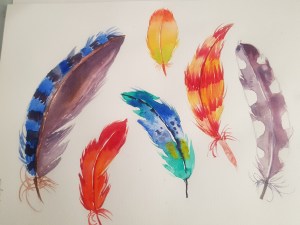
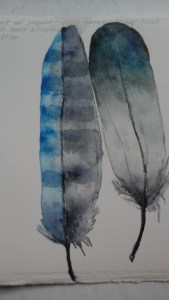
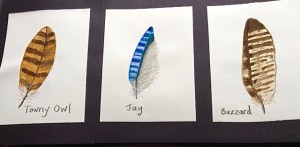
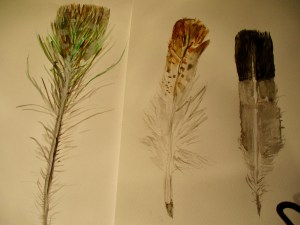
Creating life-like feathers in watercolour was Chloe’s challenge this month.

First to take flight were Bethan’s, followed by a whole host of feathers from Anne and then some more …this time from Rachel.

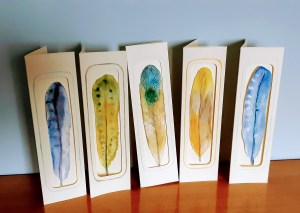
And then a further five feathers fluttering in from Trish. Plus an extra two on greetings cards, later!

Just in are Chrissie’s peacock and parrot feathers.

Then a selection of plumage from Mavis and a late flutter from Gemma.

Feather Old English fether, of Germanic origin; related to Dutch veer and German Feder, from an Indo-European root shared by Sanskrit patra ‘wing’, Latin penna ‘feather’, and Greek pteron, pterux ‘wing’. Cymraeg pluen

Click on the images for a closer – and sharper – look!

Abstract with a twist

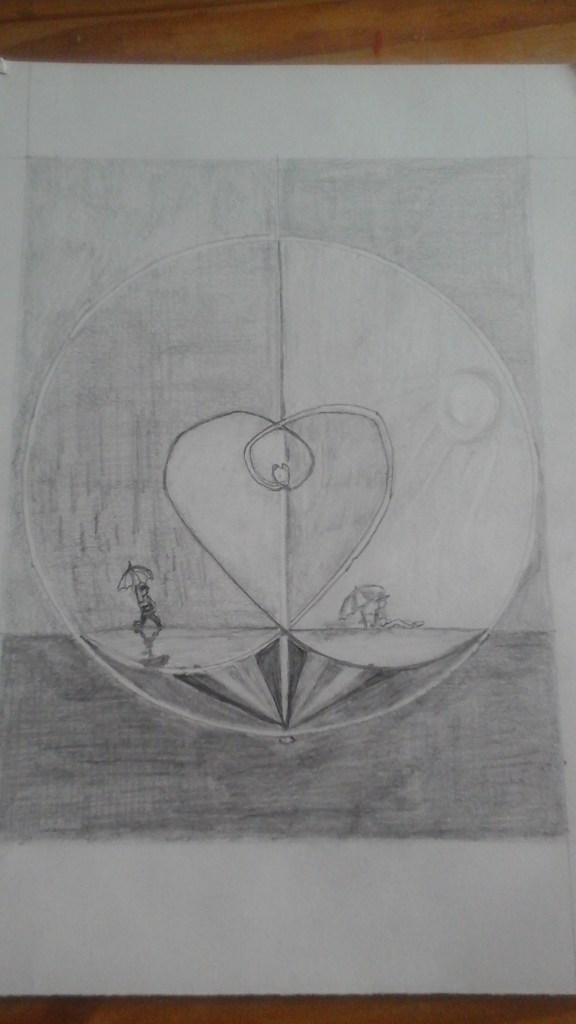
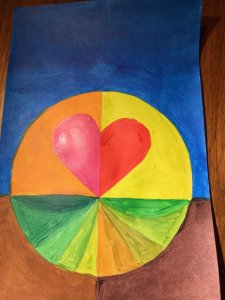
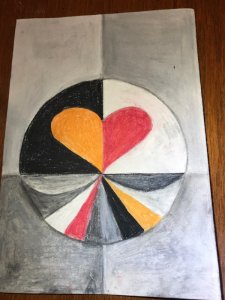
Hands up all those who can name the world’s first abstract artist! Nope… it was actually a Swedish woman – Hilma af Klint – whose work is inspiration for this week’s session, created by Sue.

Klint was way ahead of the better known Kandinsky but decreed her work would only be shown 20 years after her death (in 1944). You can see more of her work here https://en.wikipedia.org/wiki/Hilma_af_Klint

We are working from a black and white version of Klint’s original, so as not to give anything away.

First in was Trish, then Rachel, and Bethan. And then two from new member Heather.

It’s fascinating to how different they all are!

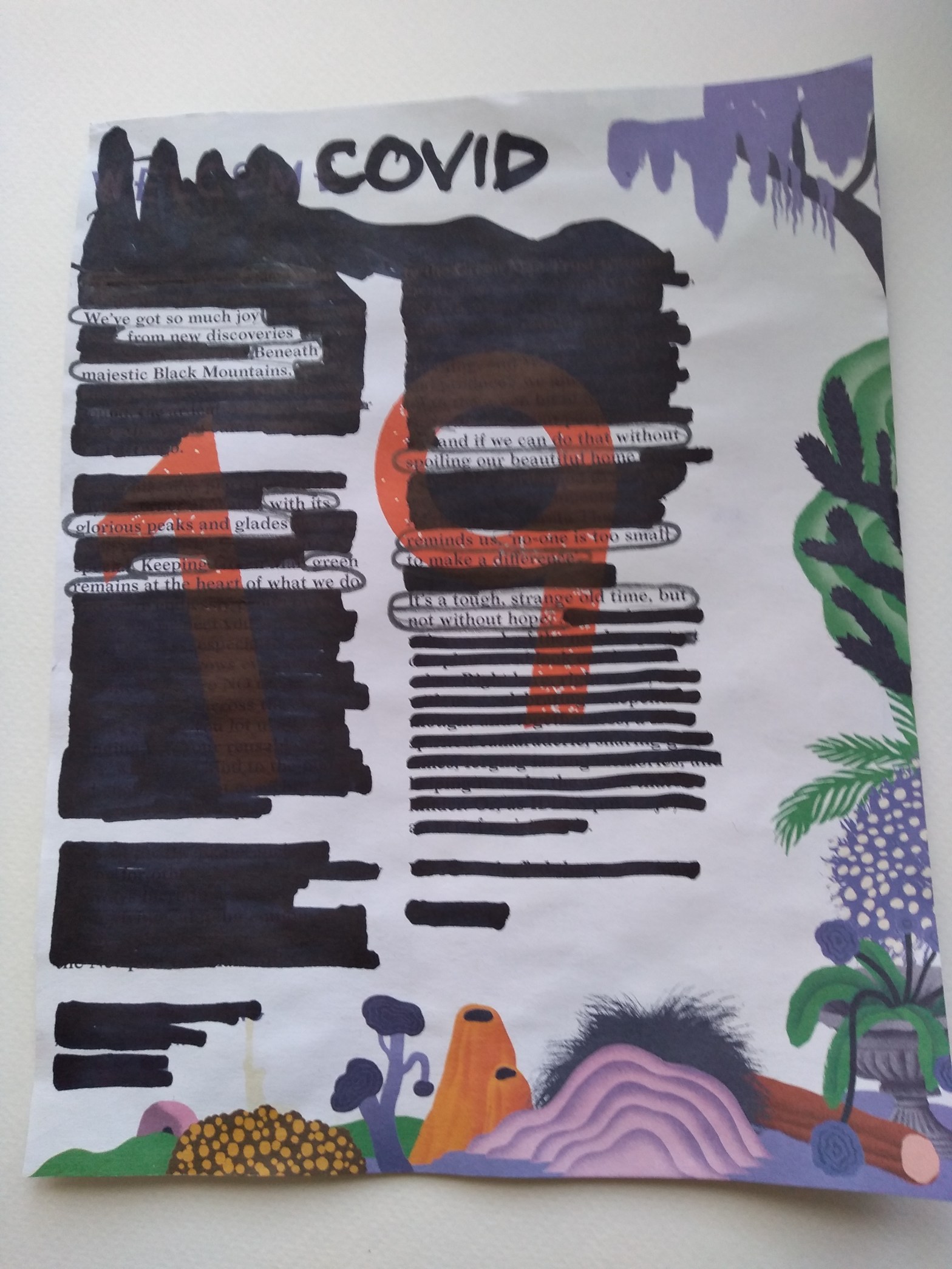
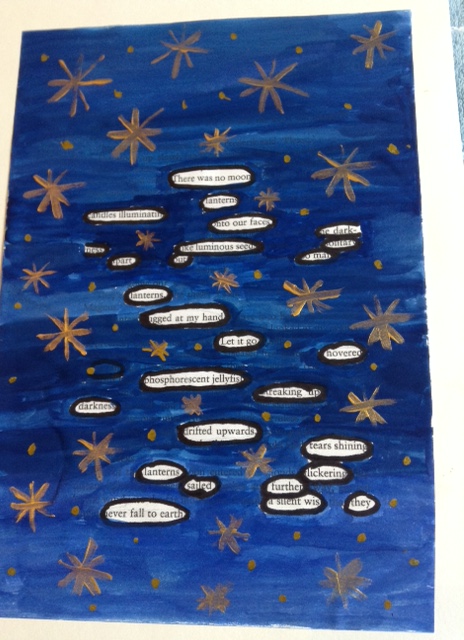
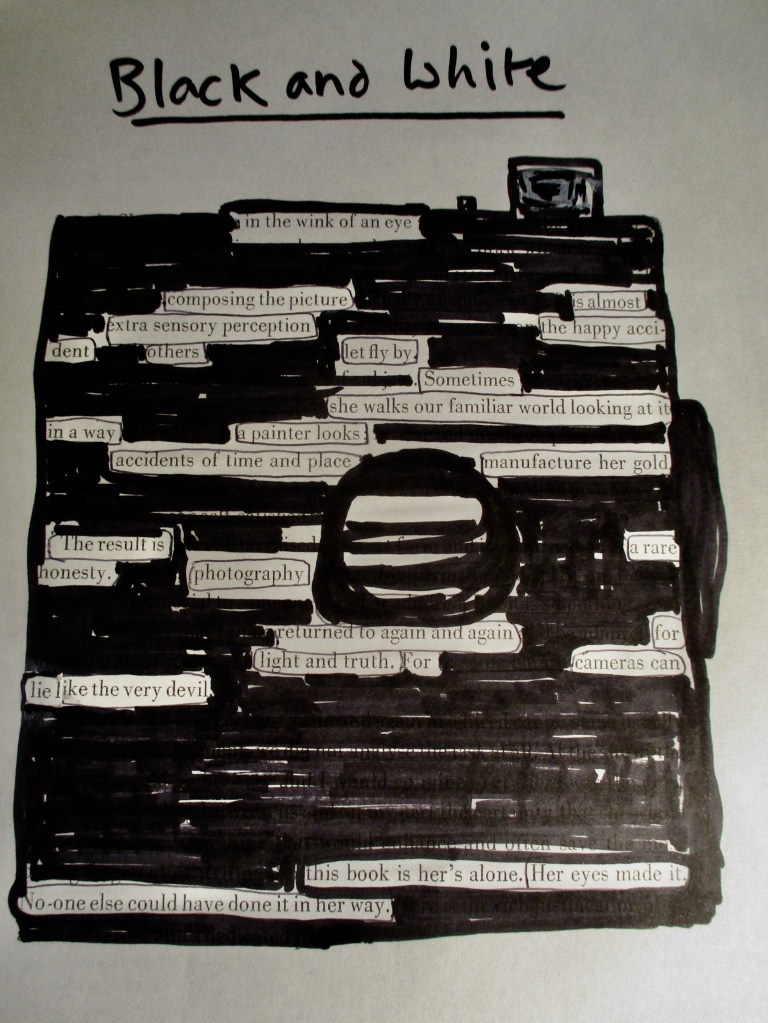
Black out poetry

Words and images harmoniously collide in black-out poetry – and no, it doesn’t involve using your nain’s curtains from the Blitz! It’s about finding the poetry hidden amongst the text of a sheet of newspaper, or an old book or magazine and then vamping it up.

First in was Trish with an eco-themed black out poem, followed by Jayne’s sea-inspired poem and then two from Beth centred on climbing trees and a local walk and Mavis’s, inspired by the night sky.

And below, Gemma’s evocative storm poem and Chrissie’s reflection on the moment.

(Click on the image to see a larger version)

Blwyddyn Newydd Da …. Happy New Year!

Well, here we are at the end of an unforgettable year with so much to be celebrated.

We’re raising a virtual glass  to everyone who took part in Still Life in 2020.

Colourful abstract paintings were a Technicolor shot in the arm (and one that didn’t need to be deep frozen!) 

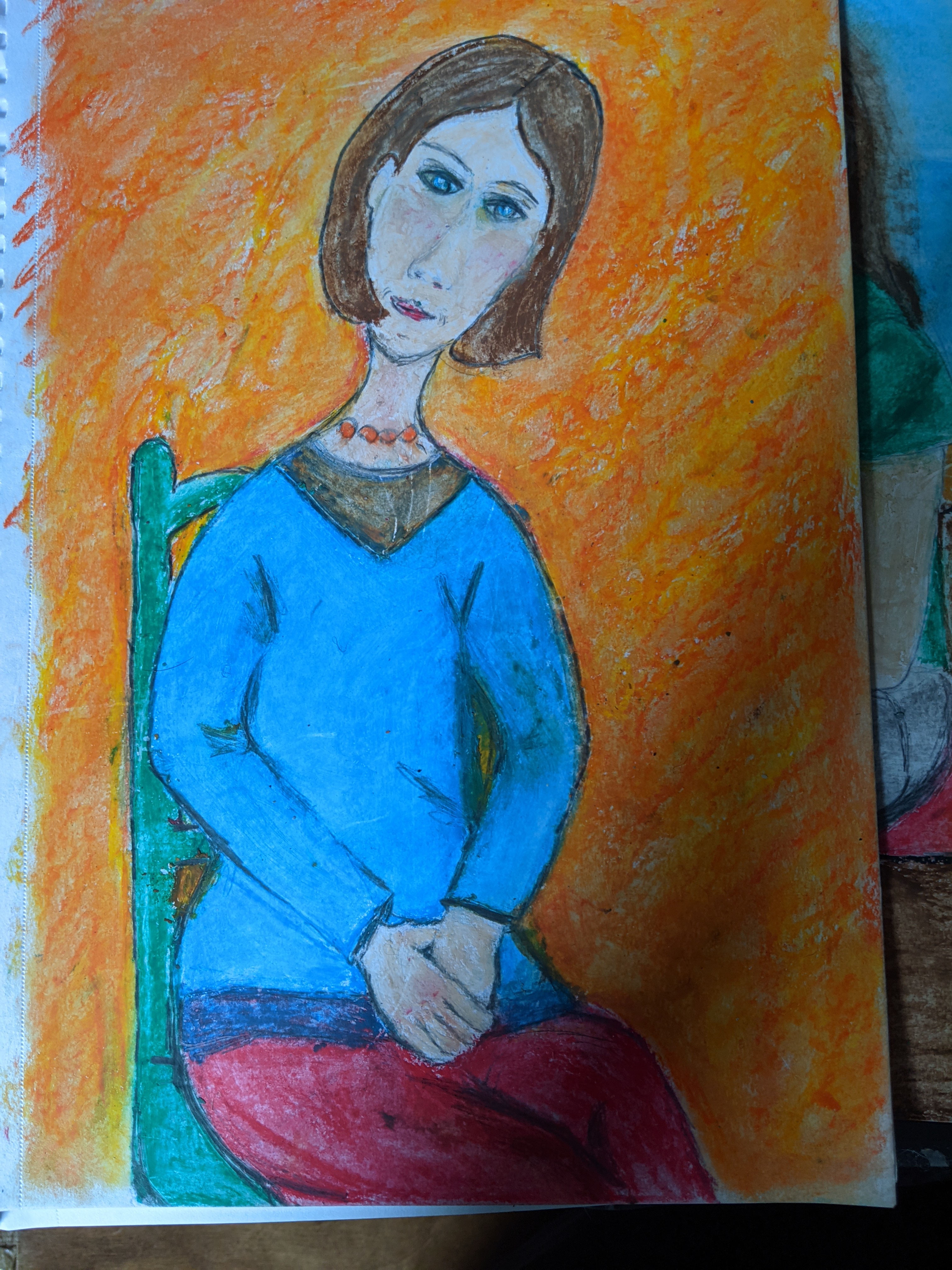
Embracing self-portraiture in drawing and painting was ideal done  at home, where first efforts could be quietly binned…

Ceramic ladybirds and Christmas decorations are the new and future heirlooms.

Weaving with hessian was an inspired idea for using what you had to hand, and nobody will be forgetting those wonderfully constructed Japanese origami dolls, any time soon!

Our website had 10,000 views in 2020 … ten times the usual!

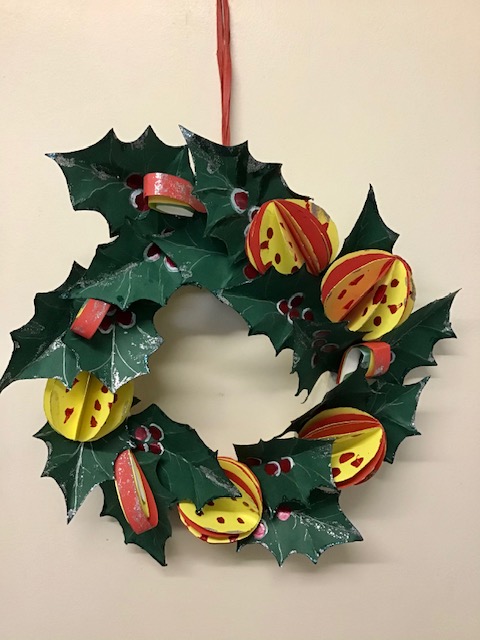
Rounding off the year were peace doves and garlands, combining a sense of tradition and a bit of much-needed calm. 

And who could resist  those cheeky felt elves, and the rabbits!!

We also created exhibitions with our illustrated poems at Conwy Culture Centre, and in Colwyn Bay Hospital’s Dementia Cafe.

Thanks go to Beryl, Chloe, Gill, Hannah, Ruth and Sue for their endless ingenuity. And also to our funders who continued to support us and ultimately made it all possible.

Here’s to an equally creative 2021…

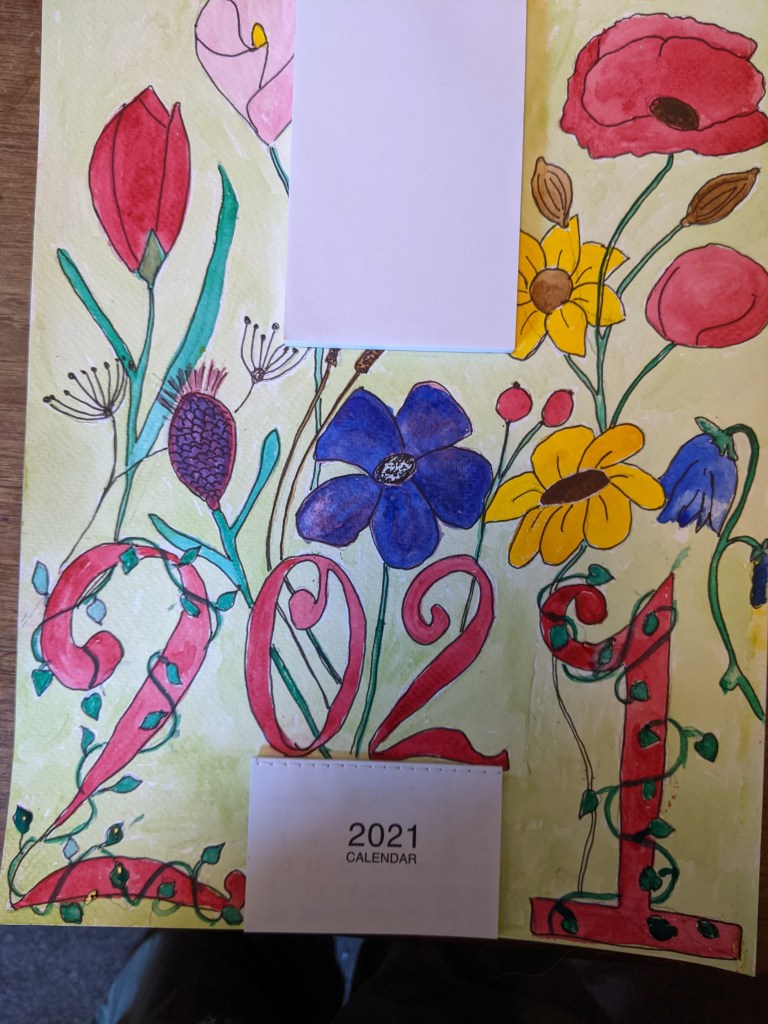
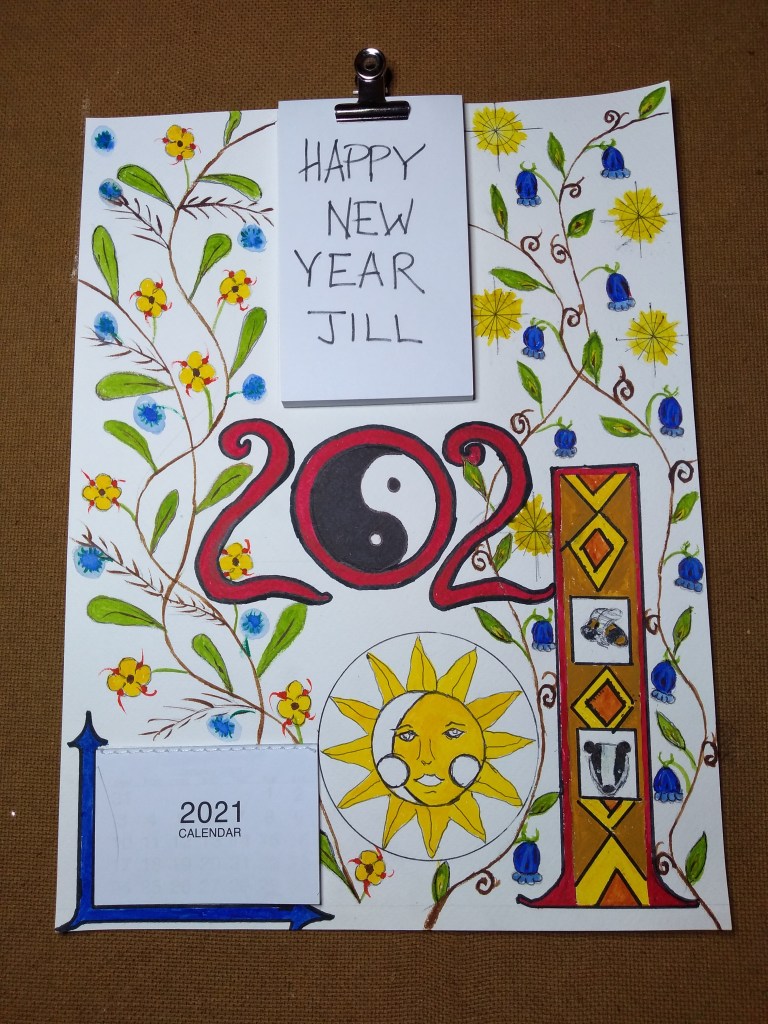
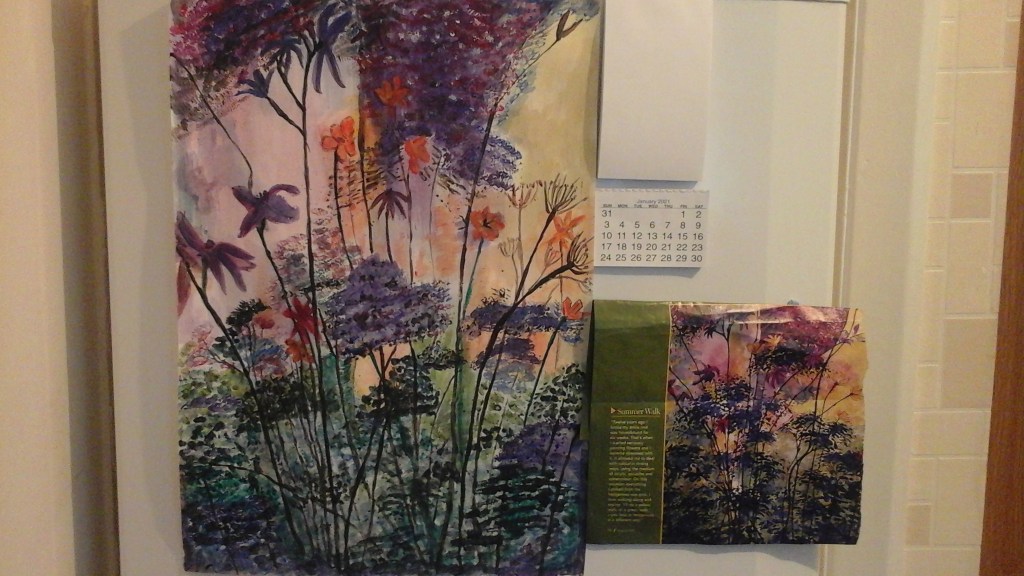
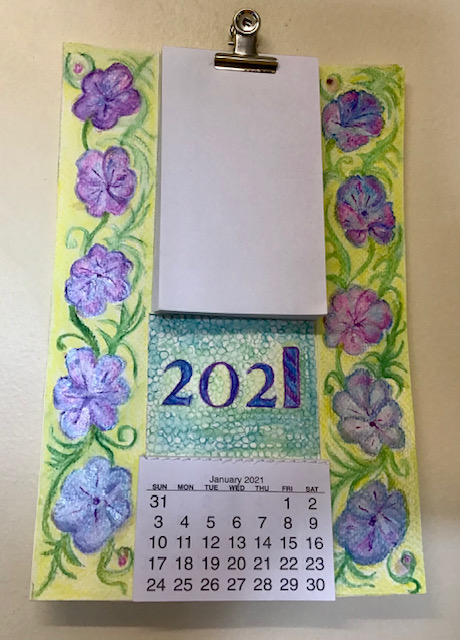
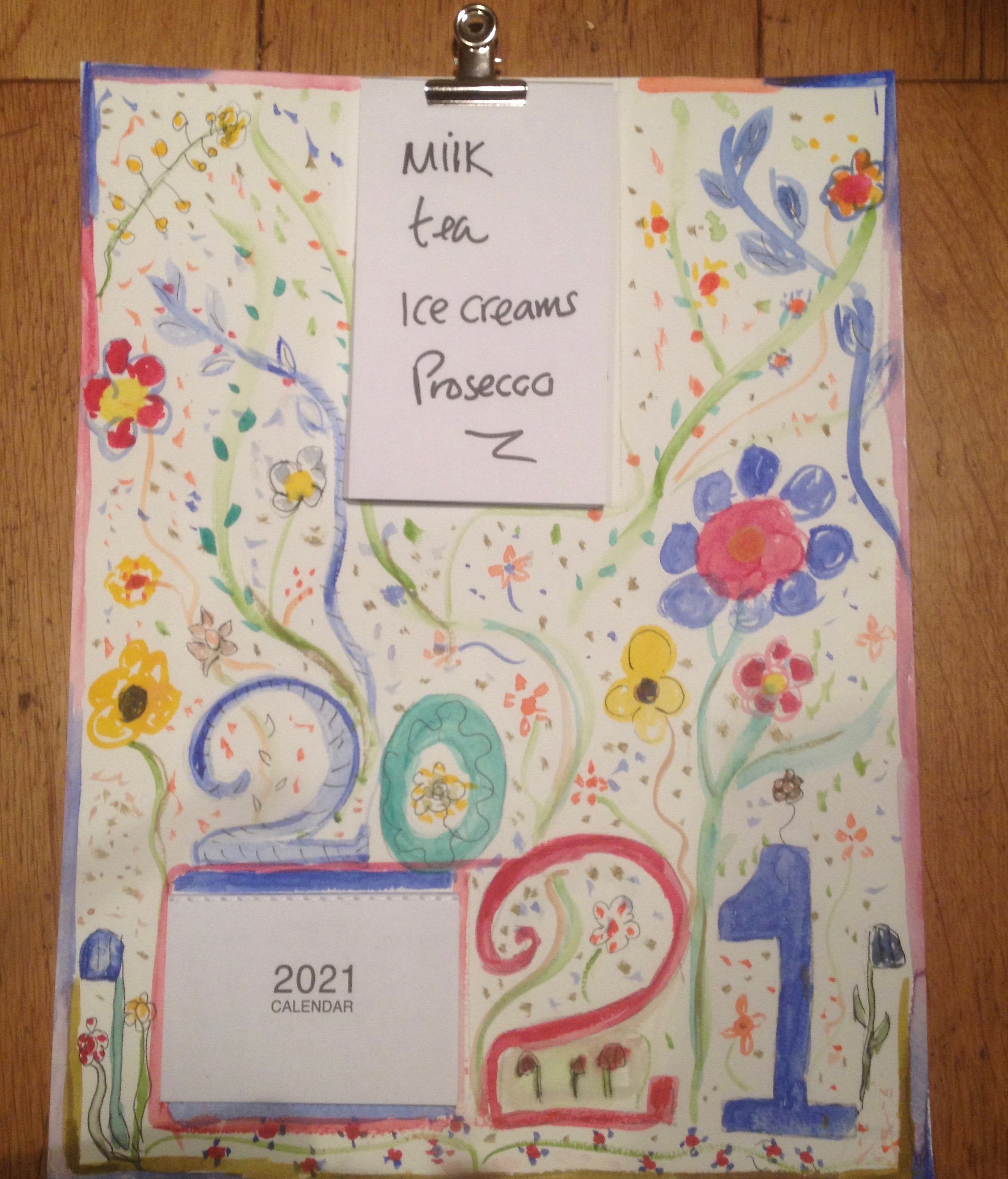
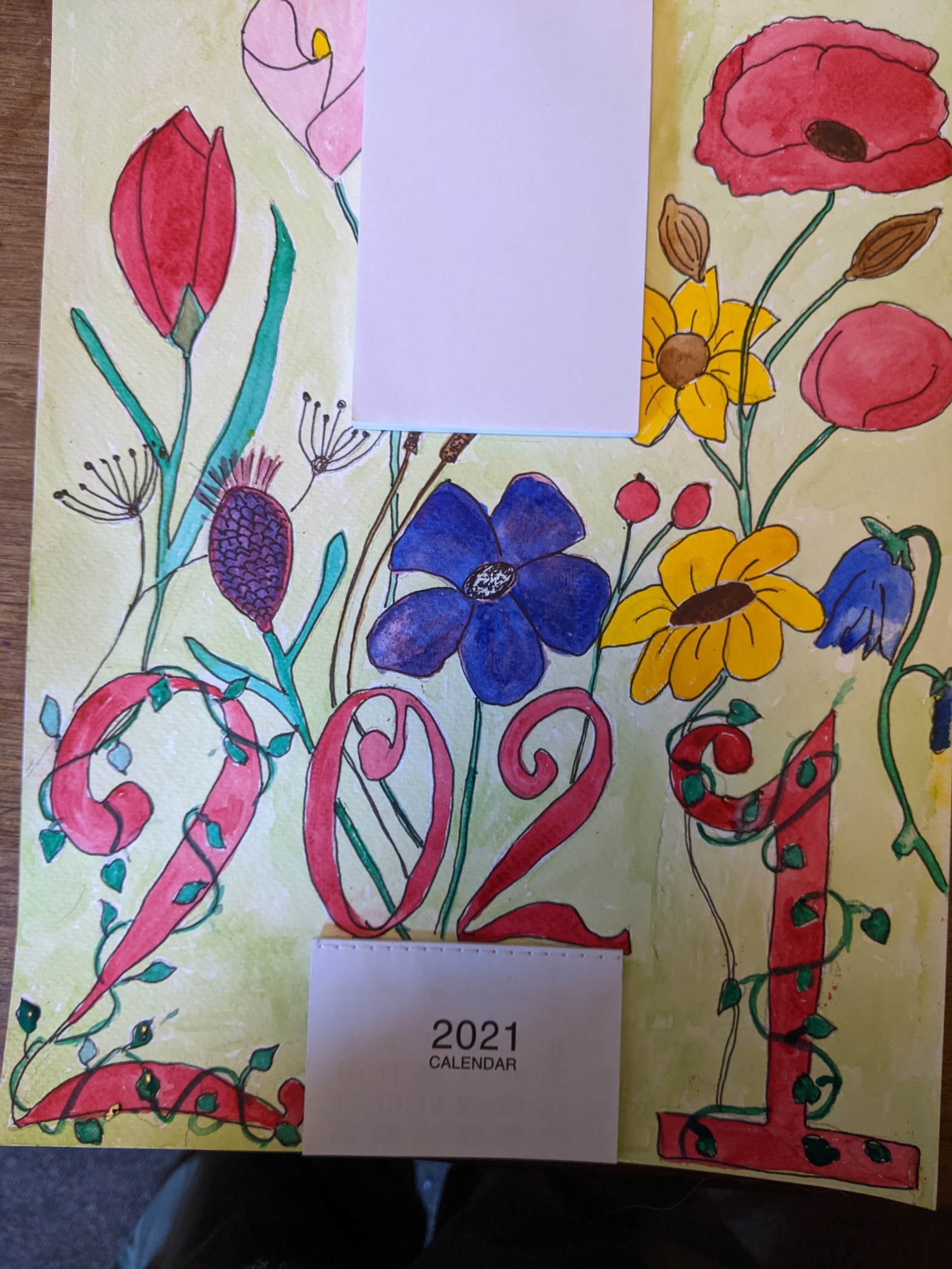
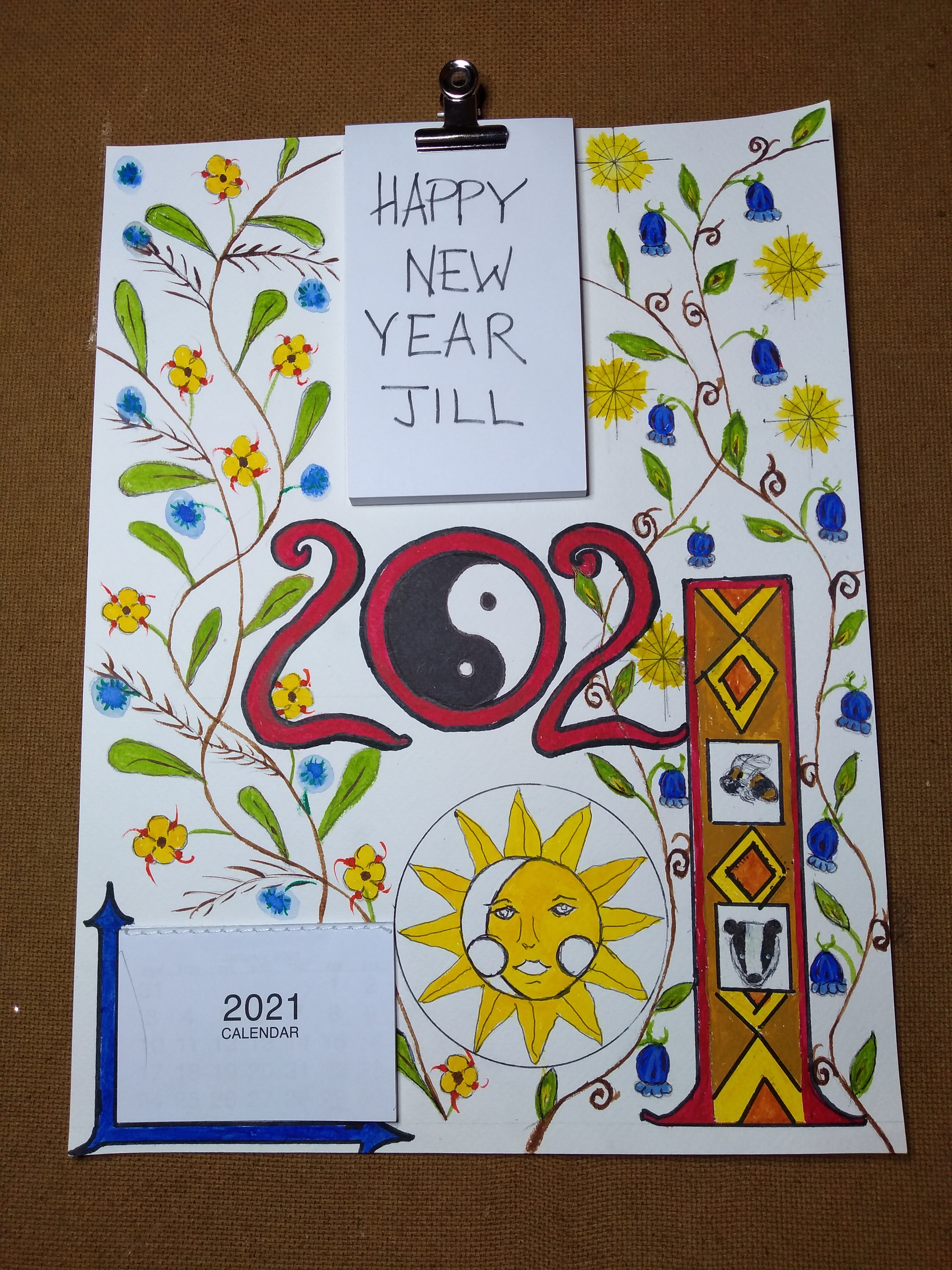
And starting us off on the right foot, handpainted 2021 calendars created by Anne (left) and Chrissie , inspired by Chloe.

Blwyddyn Newydd Da …. Happy New Year!